Beard Transplant in Albania: A Complete Guide for Italian Men
For many men, beard growth is an important part of their appearance and personal style. A full, even beard can create a stronger jawline, improve facial balance, and boost confidence. However, not every man naturally develops the beard density he wants. Some struggle with patchy growth, weak sideburns, thin cheeks, or areas affected by scars. For Italian men looking for an effective and affordable solution, a beard transplant in Albania is becoming an increasingly popular option.
Tirana has attracted growing interest from international patients because it offers modern hair restoration techniques, experienced medical teams, and lower costs than many clinics in Italy. A beard transplant can help restore missing facial hair in a natural-looking way, but the treatment must be planned carefully. Facial hair is highly visible, so angle, direction, density, and design all matter.
Why men choose a beard transplant
There are several reasons why men consider beard transplantation. Some have naturally patchy facial hair due to genetics. Others have uneven beard growth because of scars, burns, previous skin injuries, or hormonal factors. In some cases, men can grow facial hair in certain areas but not in others, which makes the beard look incomplete or irregular.
A beard transplant may be a good option for men who want to improve beard density, fill empty patches, connect the moustache and beard, strengthen the jawline, or restore hair in scarred areas. For many Italian patients, the main goal is not to create an artificial or overly dense beard, but to achieve a natural result that suits the face and grows like normal facial hair.
Who is a good candidate?
Not every patient needs the same type of beard restoration. A proper consultation is necessary to understand the facial hair pattern, the quality of the donor area, and the patient’s expectations.
Men may be good candidates for a beard transplant if they have:
Patchy beard growth.
Naturally thin facial hair.
Beard asymmetry.
Weak sideburns.
Scars in the beard area.
A poor moustache-to-beard connection.
Enough healthy donor hair at the back of the scalp.
A strong donor area is essential because the transplanted follicles are usually taken from the back of the head. The clinic also needs to assess skin condition, facial hair goals, and whether the patient wants light filling or a fuller beard design. Realistic expectations are very important, because a beard transplant should match the face naturally rather than look too sharp or unnatural.
Why the consultation matters
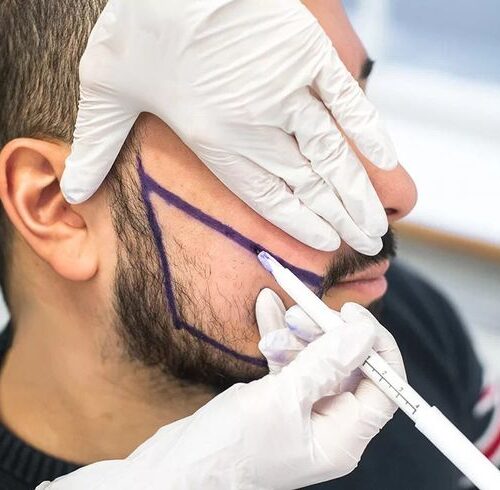
Facial hair transplantation requires more artistic planning than many patients expect. The doctor must design a beard that fits the patient’s age, facial structure, skin tone, and natural growth pattern. During the consultation, the clinic should discuss beard shape, density goals, hair direction, and the likely number of grafts needed.
Italian patients considering Albania should also ask to see examples of real beard transplant results. This is helpful because beard work is very detail-oriented. Even a technically successful transplant can look unnatural if the angles or placement are wrong.
How a beard transplant works
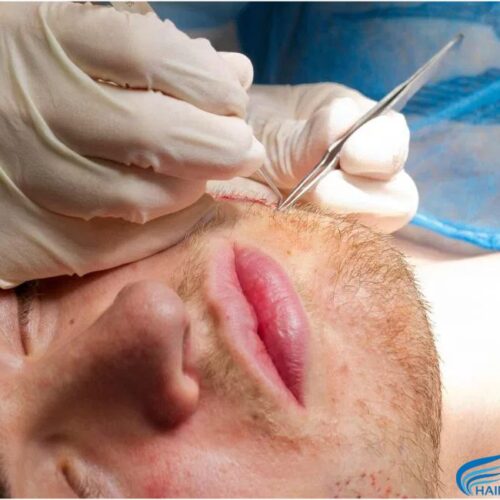
A beard transplant usually uses the FUE method. With FUE, individual hair follicles are extracted from the donor area and implanted into the beard region. This allows the surgeon to place grafts one by one in a way that follows the natural direction of beard growth.
The donor hair most often comes from the back of the scalp because this area usually has stable and healthy follicles. Once implanted in the beard area, the transplanted hairs continue to grow and can be shaved, trimmed, and maintained like normal facial hair.
Why graft placement is so important
Beard hair does not grow straight out from the skin in the same way as scalp hair. It grows at very specific angles, and those angles change depending on the area of the face. The cheeks, jawline, chin, and moustache all require slightly different placement.
This is why precision matters so much. If the grafts are implanted at the wrong angle, the beard may look unnatural when it grows. A high-quality beard transplant is not only about filling empty space. It is about creating a beard that looks balanced and believable in everyday life.
How many grafts are usually needed?
The number of grafts depends on the treatment goal. Some men only want to fill small patchy areas, while others want full beard creation with added density across the cheeks, jawline, and chin. A patient looking for scar coverage may need fewer grafts than someone starting with very limited beard growth.
The clinic usually estimates graft numbers based on photos and confirms the final plan during the in-person evaluation. What matters most is not simply using a high number of grafts, but placing the right amount in the right areas. A natural-looking beard often depends more on design quality than on maximum density.
How much does a beard transplant cost in Albania?
One of the biggest reasons Italian men consider Albania is cost. In many cases, a beard transplant in Tirana is more affordable than the same procedure in Italy. This can make treatment more accessible, especially for patients who want a high-quality result without the higher prices found in some Western European clinics.
Still, cost should not be the only deciding factor. The final price depends on the number of grafts, the complexity of the case, the reputation of the clinic, and what is included in the treatment package. Some clinics include consultation, procedure, medications, aftercare, airport transfers, and follow-up support, while others price these separately.
Italian patients should focus on value rather than the lowest quote. A cheaper procedure is not a good deal if the beard design looks unnatural or if donor hair is used poorly.
What results can Italian men expect?
Beard transplant results are not immediate. After the procedure, the transplanted hairs often fall out during the early stage, which is a normal part of the process. New growth usually begins in the following months, and the result becomes more visible gradually over time.
The final outcome depends on donor quality, skin healing, graft survival, and the accuracy of implantation. When the procedure is done well, the new beard should blend naturally with the existing facial hair. The transplanted hairs can usually be shaved and groomed like the rest of the beard once growth is established.
What recovery is like
Recovery is usually manageable, but patients should still prepare properly. In the first days, there may be redness, tiny scabs, and mild swelling in the treated area. The donor area may also feel sensitive. Clinics usually provide detailed instructions about washing, shaving, sleeping, and skin care during the healing period.
Italian men traveling to Tirana should normally plan enough time for the procedure and the first post-operative review. After returning to Italy, most follow-up communication can often continue remotely. It is important to follow the clinic’s aftercare advice closely, especially during the early healing phase.
Why Italian men are choosing Albania
Albania has become a practical option for medical tourism because it offers a combination of short travel distance, competitive pricing, and increasing experience with international patients. For men coming from Italy, the trip is relatively simple, and many clinics offer organized help with transfers, scheduling, and communication.
However, choosing the right clinic is more important than choosing the cheapest country. Italian patients should look for clinics that explain the medical plan clearly, show natural beard transplant results, and discuss realistic density rather than promising perfection. Good communication and careful planning are essential for a treatment area as visible as the beard.
FAQs
Is a beard transplant permanent?
Does a beard transplant look natural?
Is the procedure painful?
When can I shave after a beard transplant?
Is Albania cheaper than Italy for beard transplant surgery?
© 2025 Tirana Aria Clinic. All Rights Reserved.