Hair Transplant Growth Month by Month: What Italian Patients Can Expect in the First 12 Months
One of the most important things to understand after a hair transplant is that results do not appear immediately. Many Italian patients travel to Albania expecting to see fast cosmetic improvement, but hair restoration is a gradual process that develops over time.
The first year is all about patience, healing, and realistic expectations. Some phases can feel encouraging, while others may feel confusing if you do not know what is normal. A clear month-by-month timeline helps patients understand what is happening and why the final result takes time.
Why the timeline matters
After a hair transplant, the new grafts need time to settle, rest, and begin growing again. This means the early weeks and months can look very different from the final outcome. In fact, some patients feel worried at the beginning because the transplanted hairs often shed before new growth starts.
This does not usually mean the procedure has failed. It is simply part of the normal cycle. Understanding the timeline can help Italian patients stay calm, follow aftercare instructions more closely, and avoid judging the result too early.
Month-by-month hair transplant timeline
In the first 12 months, patients may notice the following stages:
Month 1: healing, redness, scabbing, and early shedding of transplanted hairs.
Month 2: the transplanted area may look quiet, with little visible growth.
Month 3: shedding usually settles, but density may still appear low.
Month 4: early regrowth often begins, although the hairs may look thin and uneven.
Month 5: more visible growth starts to appear.
Month 6: many patients notice clearer improvement in shape and density.
Months 7 to 8: the hair usually becomes fuller and begins to look more natural.
Month 9: texture and coverage often continue improving.
Month 10: the result looks more mature in many patients.
Month 11: remaining weaker areas often continue catching up.
Month 12: the final result is usually much clearer and closer to its long-term appearance.
Month 1: Healing and shedding
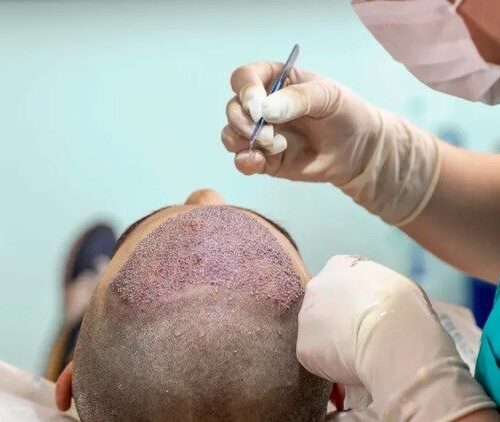
The first month is mainly about recovery rather than cosmetic results. During this stage, the scalp may show redness, scabs, mild sensitivity, and the first signs of shedding. This part can be emotionally difficult for patients because the area often looks less full than expected.
However, early shedding is usually normal. The follicles remain under the skin even if the visible hairs fall out. This is why clinics often remind patients not to judge the result in the first few weeks.
Months 2 and 3: The quiet phase
These months are often the most frustrating part of the process. Many patients see very little visible progress and may wonder whether the transplant is working. In reality, the follicles are often still in a resting phase.
The transplanted zone may look patchy or unchanged during this period. This is common, especially for patients who expected steady growth right after surgery. Patience is essential here.
Months 4 to 6: Early growth begins
Between months four and six, the first encouraging changes usually become visible. New hairs begin to grow, but they may still be thin, soft, or irregular at first. The result is often not dense yet, but the direction of progress becomes easier to see.
By month six, many Italian patients feel much more positive because the treated area starts looking fuller than before. The hairline usually becomes easier to evaluate, although it is still not the final result.
Months 7 to 9: Density improves
This is often the stage when the transplant starts to look more natural in everyday life. The hairs usually become stronger, longer, and better blended with the surrounding hair. Density improves gradually, and the patient can usually style the area more easily.
Not all zones develop at exactly the same speed. The crown, for example, can take longer than the frontal hairline. That is why some patients see better progress in one area before another.
Months 10 to 12: Maturation phase
During the final part of the first year, the transplant usually becomes much more refined. The hair tends to thicken, soften, and settle into a more natural pattern. By month twelve, most patients have a much clearer view of their final result.
Even at this stage, minor improvements can still continue in some cases. But for most patients, the one-year mark is when the outcome can be judged properly. That is why before-and-after comparisons are often most meaningful at 12 months rather than earlier.
What can affect the speed of growth?
Not every patient grows at exactly the same pace. Age, genetics, healing response, graft survival, aftercare, smoking habits, and general scalp condition can all influence how quickly the new hair becomes visible. The treated area also matters, since some zones naturally appear to mature more slowly.
This is why comparing your result too closely with someone else’s timeline can be misleading. A slightly slower start does not automatically mean a poor result. What matters more is the overall progression across the year.
What Italian patients should keep in mind
Patients traveling from Italy to Albania often return home shortly after the procedure, so they experience most of the growth process back in Italy. This makes follow-up communication especially important. Good clinics usually explain the timeline clearly and stay available for updates during the recovery period.
It also helps to take monthly photos in the same lighting and angle. Because hair growth is gradual, daily mirror checks can be misleading. Monthly photos make it easier to notice steady improvement.
Common mistakes during the first year
One common mistake is expecting immediate density. Another is panicking during the shedding phase and assuming the grafts are lost. These reactions are understandable, but they often come from not knowing how normal the early timeline can be.
Patients also make mistakes when they ignore aftercare instructions, return to intense activity too soon, or judge the transplant at month three or four. Hair restoration takes time, and the best results usually come from patience and proper recovery habits.
Final thoughts
A hair transplant is a long-term process, not an instant transformation. For Italian patients coming to Albania, knowing the month-by-month growth timeline can make the experience far less stressful and far more realistic.
The first year usually includes healing, shedding, early regrowth, improving density, and gradual maturation. When patients understand these stages in advance, they are better prepared to stay patient, follow medical advice, and evaluate the result at the right time.
FAQs
Is it normal for transplanted hair to fall out after surgery?
When do most patients start seeing new growth?
Why does my hair transplant look thin at month five?
Does the crown take longer than the front?
When can the final result be judged?
© 2025 Tirana Aria Clinic. All Rights Reserved.