How Many Grafts Do You Really Need? Medical Evaluation Explained
One of the most common questions Italian patients ask when considering a hair transplant is:
“How many grafts do I actually need?” This question is not just about appearance. The correct number of grafts is a medical decision that directly affects safety, natural results, and long-term stability. Understanding how grafts are evaluated helps patients avoid unrealistic expectations, unnecessary procedures, and long-term complications—especially when treatment is performed abroad.
This article explains how a proper medical evaluation is conducted, why graft numbers should never be standardized, and how Italian patients can make informed decisions when choosing hair transplant treatment in Albania.
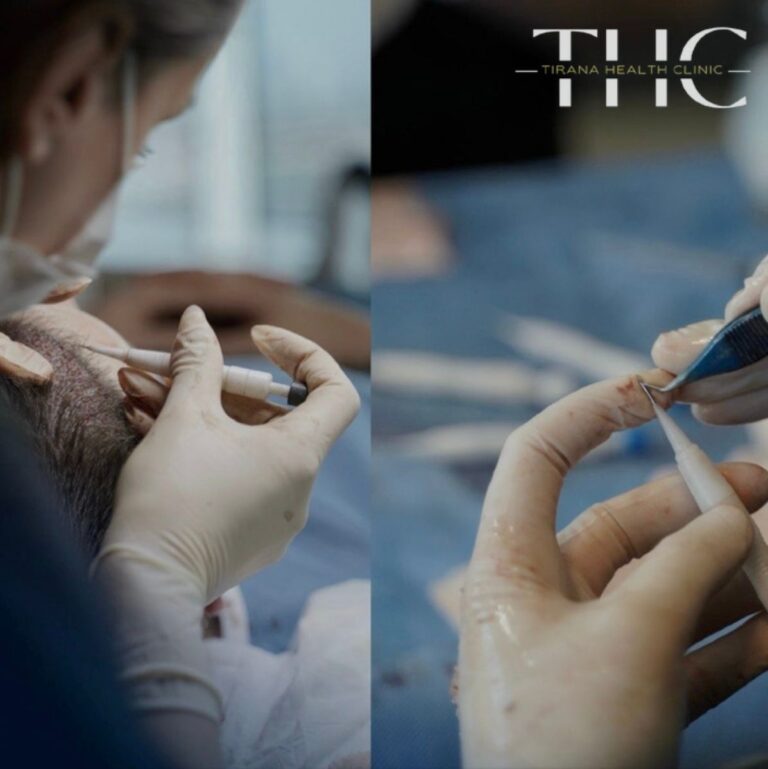
Why graft count is a medical decision, not a sales number
Many Italian patients delay hair transplantation due to high costs in Italy, long waiting times, or unclear treatment proposals. When evaluating treatment abroad, a new concern often arises: “Will they recommend more grafts than I really need?”
A reputable clinic does not base graft numbers on packages or fixed offers. Instead, graft estimation follows a personalized medical assessment, comparable to the standards used in leading European clinics.
At Tirana Health Clinic, graft evaluation follows European clinical protocols and uses CE-certified diagnostic tools. The objective is not to maximize graft numbers, but to achieve a safe, natural, and sustainable outcome.
What a graft actually is and why numbers can be misleading
A graft is a follicular unit that may contain one to four hairs. This means that the same number of grafts can produce very different visual results depending on follicle quality and hair characteristics.
Two patients receiving 2,500 grafts may end up with completely different density outcomes. This is why a correct evaluation focuses on distribution, hair caliber, and biological characteristics, not just numerical totals.
What determines how many grafts you truly need
There is no universal graft number that works for everyone. During a proper medical evaluation, several clinical factors are carefully analyzed.
Extent and pattern of hair loss
A mild frontal recession requires far fewer grafts than advanced hair loss affecting the hairline, mid-scalp, and crown. Hair loss classification is the starting point of any evaluation.
Donor area quality
The density and health of the donor area determine how many grafts can be safely extracted without compromising its appearance. Over-harvesting can lead to visible thinning and long-term issues.
Age and future hair loss progression
Younger patients often require a more conservative strategy, as hair loss may continue over time. Planning only for the present situation can create problems in the future.
Realistic aesthetic goals
Natural hair density is not uniform across the scalp. A responsible medical plan aims for balance and harmony rather than artificially dense results that may not age well.
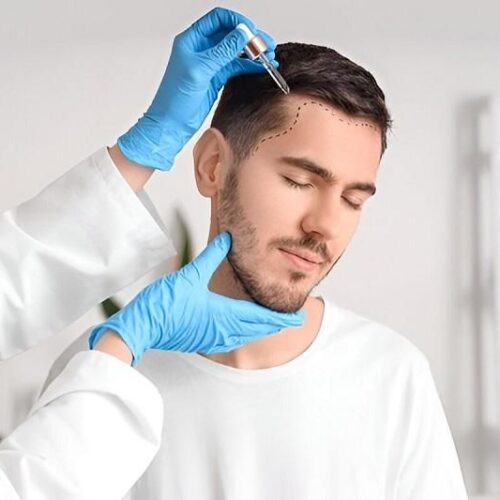
How a proper graft evaluation is performed in Tirana
A reliable evaluation is never based on generic photos or automated responses. At Tirana Health Clinic, graft assessment includes clinical examination, digital scalp analysis, and long-term planning.
Doctors take time to explain the rationale behind the proposed graft number, expected density, and limitations of the procedure. Importantly for Italian patients, medical staff and coordinators speak fluent Italian, ensuring that all explanations are clearly understood.
Clinics in Tirana operate under European healthcare standards and use CE-certified equipment, matching the medical expectations of patients from Italy.
Why standardized graft packages should raise concerns
Offers such as “3,000 grafts for everyone” or fixed graft packages are indicators of a commercial approach rather than a medical one. Excessive graft extraction increases the risk of donor area damage, unnatural density, and limited options for future procedures.
A conservative, individualized plan is always safer and leads to more natural, long-lasting results.
Quick checklist: When a graft evaluation is medically reliable
It is based on an individualized clinical assessment
It considers donor area preservation and future hair loss
It follows European protocols with CE-certified technology
It avoids fixed graft packages or standardized offers
It is explained clearly, in Italian, by medical professionals
Albania and Italy: Same medical standards, faster access
Many Italian patients worry that medical evaluations abroad may be less thorough than those performed in Italy. In reality, accredited clinics in Albania follow the same European medical standards, often with shorter waiting times and more flexible scheduling.
Additionally, Tirana is only about a one-hour flight from Italy, making both evaluation and treatment logistically simple without the burden of long-distance travel.
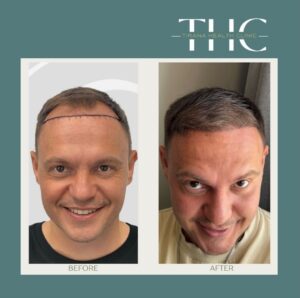
What happens after the graft evaluation
Once the correct graft number is established, a detailed surgical plan is prepared. Patients receive clear explanations about expected outcomes, limitations, and recovery timelines.
After returning to Italy, patients benefit from structured remote follow-up, allowing the medical team to monitor progress and address any concerns during recovery.
Conclusion: The right number of grafts is the one tailored to you
Understanding how many grafts you really need is essential for protecting your health, achieving natural results, and ensuring long-term satisfaction. A proper medical evaluation, conducted under European standards and explained transparently, allows Italian patients to make informed and confident decisions.
When quality and safety are the priority, graft numbers are not a sales promise—they are a carefully calculated medical choice.
FAQs
How do doctors determine how many grafts I need?
Is there a “normal” or average number of grafts for everyone?
Can too many grafts be harmful?
What is the difference between grafts and hairs?
Is an online graft evaluation reliable?
Are graft evaluations in Albania comparable to those in Italy?
Will my graft plan consider future hair loss?
What happens if my graft needs change after the evaluation?
© 2025 Tirana Health Clinic. All Rights Reserved.