The Hair Transplant Timeline: What Happens Day by Day After Your Surgery in Tirana
Undergoing a hair transplant is a significant medical decision, especially for Italian patients who are considering treatment abroad to reduce costs without compromising medical quality. One of the most common and legitimate questions is:
“What actually happens after the surgery?” Understanding the day-by-day recovery timeline after a hair transplant in Tirana helps patients plan their travel, reduce anxiety, and approach the procedure with realistic expectations. This article provides a clear, medically accurate overview of what Italian patients can expect after surgery, from the day of the procedure to the final result.
Why the post-operative timeline matters for Italian patients
Many Italian patients postpone hair transplantation due to high costs in Italy, long waiting lists, or fear about medical standards abroad. In reality, when the procedure is performed in a properly regulated clinic, the post-operative journey is predictable, safe, and well structured.
At Tirana Health Clinic, hair transplant procedures follow European clinical protocols, use CE-certified medical devices, and include structured follow-up care designed specifically for international patients, including those from Italy.
Day 0: The day of the hair transplant procedure
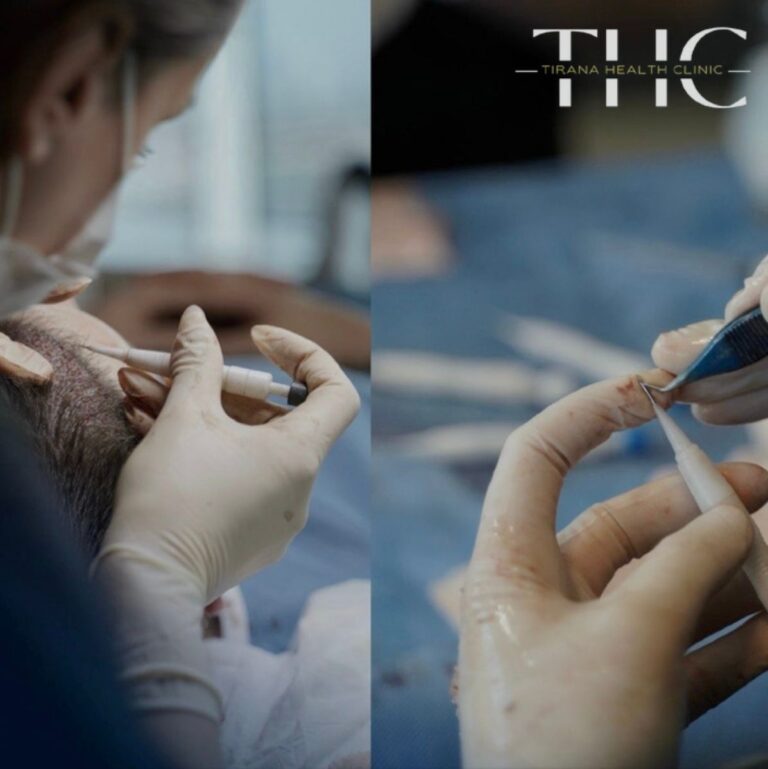
Hair transplantation is performed under local anesthesia, most commonly using FUE or DHI techniques. The procedure typically lasts between 6 and 8 hours, depending on the number of grafts required.
After the surgery:
the patient is discharged the same day
a protective dressing is applied if necessary
detailed post-operative instructions are provided
Doctors and patient coordinators speak fluent Italian, ensuring that all medical explanations, instructions, and concerns are clearly understood.
Days 1–3: The first 72 hours after surgery
The first three days are critical for graft survival. During this phase, it is normal to experience mild and temporary symptoms such as swelling in the forehead area, redness around the transplanted follicles, and a sensation of tightness in the scalp.
Most patients remain in Tirana during this period for initial medical checks. This is particularly convenient for Italian patients, as Tirana is only about a one-hour flight from Italy, making travel simple and stress-free.
Patients are advised to rest, avoid physical exertion, and strictly follow the medical guidelines provided by the clinic.
Days 4–7: Early stabilization phase
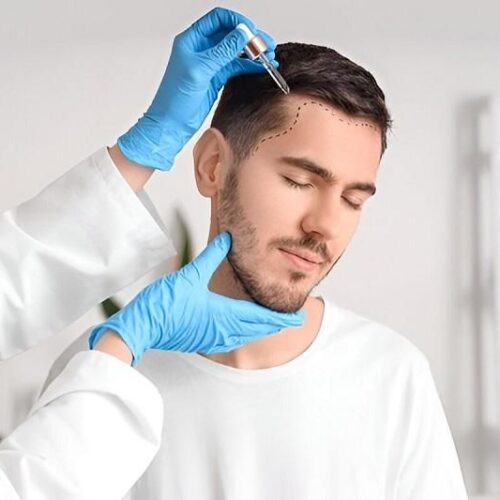
During this phase, swelling gradually subsides and the donor area begins to look more natural. Small scabs form around the transplanted follicles, which is a normal part of the healing process.
The first controlled hair wash is performed according to a precise medical protocol. Proper washing is essential to reduce infection risk and to support healthy healing of the scalp.
Weeks 2–4: Temporary shedding of transplanted hair
This stage often causes concern, but it is medically expected. The transplanted hairs begin to shed, while the follicles remain alive beneath the skin. This phenomenon, known as shock loss, does not indicate treatment failure.
Patients are informed about this phase in advance to avoid unnecessary anxiety. Hair shedding at this stage is temporary and part of the natural follicular cycle.
Months 2–4: Early regrowth phase
New hair growth typically begins between the second and fourth month after surgery. The hairs may initially appear thin and lighter in color, but this is normal.
During this period, patients can fully resume normal daily activities, including work, exercise, and social life. The scalp continues to normalize, and visible improvement gradually becomes noticeable.
Months 6–12: Final results and long-term outcome
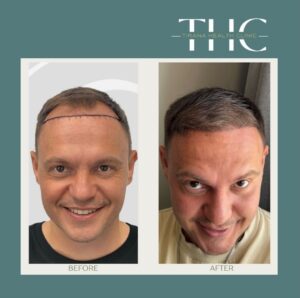
Between six and twelve months after the procedure, hair density increases significantly. The hair becomes thicker, stronger, and more consistent in texture. The hairline appears natural and well integrated with existing hair.
With appropriate care and adherence to medical advice, the results are long-lasting and stable.
Why hair transplantation in Tirana is safe for Italian patients
Medical protocols compliant with European (CE) standards
Experienced doctors specialized in hair restoration
Italian-speaking medical and support staff
Structured post-operative follow-up after returning home
Short travel time and easy logistics from Italy
Follow-up care after returning to Italy
A common concern among Italian patients is continuity of care. After returning to Italy, patients receive ongoing remote support, personalized care instructions, and complete medical documentation.
This follow-up system ensures that recovery continues safely and that any questions or concerns can be addressed promptly, even after leaving Albania.
Conclusion: A clear, safe, and predictable medical journey
Understanding the day-by-day hair transplant recovery timeline in Tirana allows Italian patients to approach the procedure with confidence and clarity. When performed in a certified clinic that follows European standards and provides Italian-language support, hair transplantation in Albania represents a safe, effective, and well-organized medical choice.
Education, transparency, and proper medical planning are key to achieving successful and lasting results.
FAQs
Is the recovery after a hair transplant painful?
How many days should I stay in Tirana after the surgery?
When can I return to work after a hair transplant?
Is it safe to travel back to Italy shortly after the procedure?
What happens if I have questions after returning to Italy?
When will I see the final results of my hair transplant?
Are the medical standards in Albania comparable to those in Italy?
© 2025 Tirana Health Clinic. All Rights Reserved.